Saturday, 16 November 2013

Chennai Chess Championship chomps calories

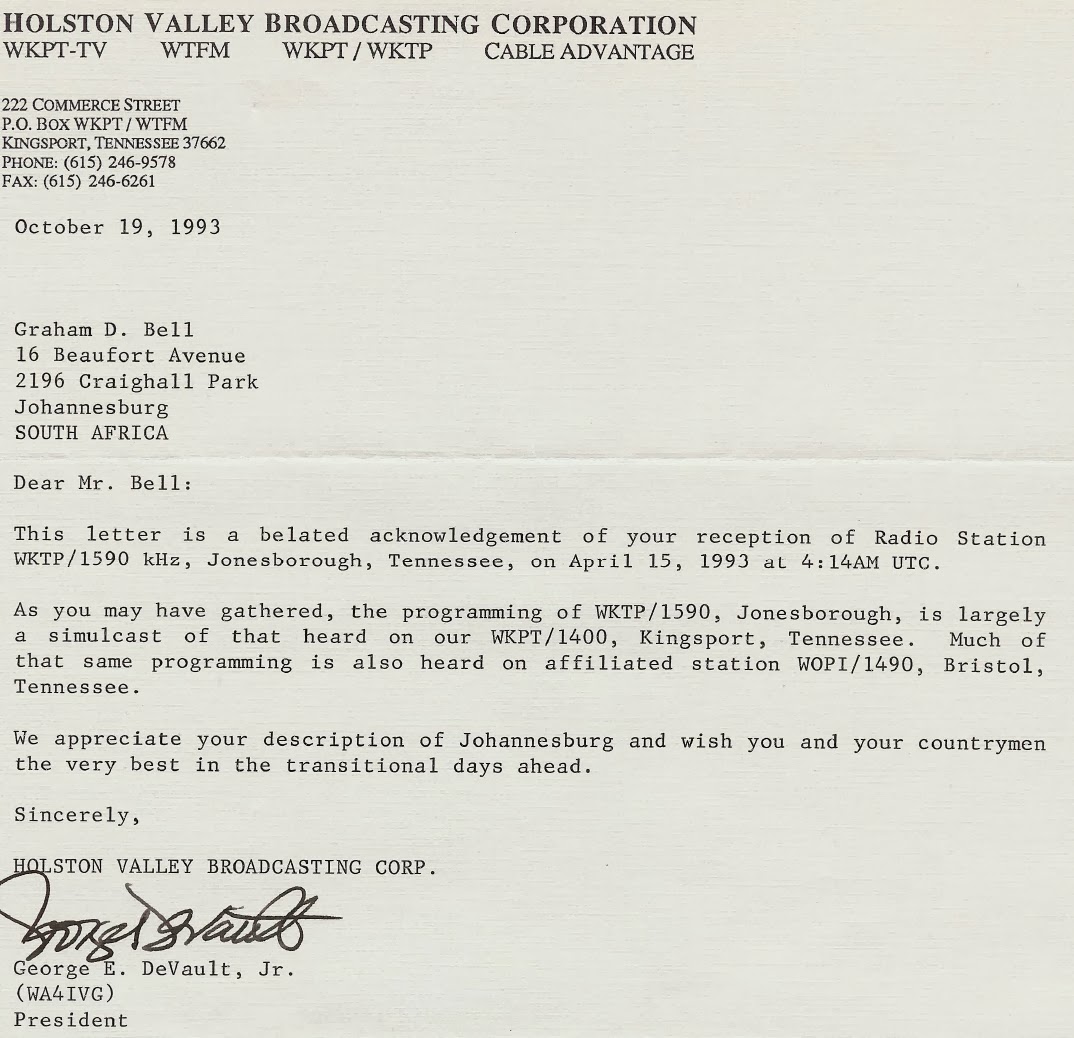
'...AND ANAND MOVES HIS BISHOP TO E6, OH MY, CROWD GOES WILD!!!' The World Chess Championship is under way with Magnus Carlsen scoring the first win in the 5th game of 12 to take a 3-2 lead. He will be on his way to becoming the greatest ever if he defeats Viswanathan Anand, although Kasparov and Fischer are still widely seen as los supremos. The organisers have tried to stir up a media storm and may yet succeed but it seems unlikely that the characters will inspire the public imagination like the eccentric Bobby Fischer or even the politically savvy Kasparov. Carlsen and Anand are just too normal while the cold war, which provided the backdrop for Fischer and Kasparov, is over. For all those chess buffs out there this is a chance to burn up some extra calories without leaving their seats. You can watch live and compute your version of the multiple combinations before the players actually commit. Do you in fact burn more calories when you think hard? The jury is out on this. It seems the brain chugs along most of the time, burning about 20% of our energy. But it's not certain that you consume more gas when you're trying to beat Larsen at his own game. One thing we do know is that brain is still some way ahead of machine. Sure, Deep Blue beat Kasparov in 1997 but, despite the exponential options thrown up in chess, the process is still essentially mechanical. Massive supercomputers like the Titan in Tennessee are probably only around 1/50th as efficient as a human brain. The Titan fills a house-sized building, while the brain is the size of a spanspek, yet makes far more computations. The QSL comes from Radio WKPT, Jonesborough, Tennessee. The station, using just 5kW was heard in Johannesburg in 1993. The station president sent best wishes for SA just before democracy in 1994.

Saturday, 9 November 2013

FARC spark into politics

A malachite sunbird flits down onto our little sugar-water bottle, sips quickly, looks up and scans, sips again. That stuff is so sweet! But then the balance between sweetness and caution becomes too great and it zips away. It's all about how much to give up to get what you want. Peace seems to be breaking out all over the place. In the same week, we read of Iran and the US trying for a preliminary deal on Iran's nuclear programme, while in Colombia the rebel group FARC is talking with government about renouncing war for politics. Naturally, sceptics abound on all sides. No doubt Iran is hurting after tough sanctions have knocked back its oil exports and cut access to international banking networks. In Colombia the government has pursued a vigorous military campaign against FARC for many years, severely clipping its wings. Ex-president Alvaro Uribe, whose earlier clamp-down on FARC has ultimately led to this peace process, opposes any deal. Many remember the thaw a decade ago which FARC cynically used to regroup and relaunch its programme of kidnapping, terror and drug dealing. Deal-making is complicated. Both sides must get some of what they want and but neither can get most. Somewhere in between is a medium, not necessarily a happy medium, but one that can work. The alternative of continued conflict is lose-lose but often the sad outcome of failure. Colombia is one of my favourite economies with a steady record of good growth, low inflation and solid management. A deal with FARC would most likely reinforce this despite the sceptics. The QSL is from Radio Fantasia, heard on AM in Johannesburg in 1986, one of a small handful of Colombian AM stations I've verified.

Sunday, 3 November 2013

All Black is the new green and gold


Some times I wouldn't mind being a New Zealander. Then, when the All Blacks run on the field against the Springboks I could support them without any feelings of guilt. Patriotism is a heavy burden. Born out of subliminal radiation right from the cradle and nurtured by shared experiences of time and space, it has a hold on you that's hard to snap. Many frown on those who attempt to break it. To illustrate how pervasive it can be, I still have these nostalgic moments when hearing the old SA national anthem, Die Stem, and seeing the old SA flag because they hark back to early morning trumpet reveilles in the army - a place I didn't want to be, doing something I didn't want to do - in the old South Africa. Living abroad shifts the patriotic dimension. Once you've resided outside of your homeland for a while your links with home become more tenuous. Many emigrants we know talk of how they are never quite sure anymore where they'd rather be. This is not as disturbing as it sounds. Actually it makes life richer to know that you're also rooted in another place far away. But going back to New Zealand, they just play a more inspired brand of rugby. It's all about speed, support and handling. Power is essential too but more to out-manoeuvre than to out-muscle. The Springboks are now trying to adapt to this technique but so far the Blacks have totally outplayed them. Bravo for trying but there's a long way to go. You always feel the temptation is there to fall back on the old up and under, which mostly just serves to give the ball away. The QSL is from Print Disabled Radio, heard in Sheigra in the far north-west of Scotland in November 1996 on the 75mb. This low-powered, 1 kW station, broadcasting from Levin, New Zealand,  was over 11000 miles away.

Saturday, 26 October 2013

It takes two to Togo


Togo is just a little country in West Africa, sandwiched between Ghana and Benin. The president, Faure Gnassingbé took over from his father, Gnassingbé Eyadéma, in 2005 after the latter's 38-year rule. So nothing too unusual there! In the news recently was Emile Edouwodzi N'Bouke, also know as The Boss (no connection with Bruce Springsteen). He was detained after a chunky 700kg of ivory was discovered in his shop in Lomé, Togo's port capital. Apparently there are only 60 elephants left in Togo so people are rightly indignant about ivory smuggling. Here in SA barely a week goes by without another sad tale about rhino poaching, which has become endemic. It seems the market for both ivory and rhino horn is mainly in Asia: ivory for jewellery and chopsticks, rhino horn for medicine to control fever and convulsions. Across the world in Japan is another Togo, the Togo Seisakusyo Corp., a company that dates back more than 150 years. It has survived earthquakes, typhoons, wars and asset bubbles but now sees itself under threat from Abenomics, which aims to restore inflation, in turn triggering a sharp decline in the yen. This small maker of springs for the giant Toyota motor corporation is struggling in an environment of a falling exchange rate and rising costs. While many are rejoicing at the commitment of Abe to pushing up Japan's nominal GDP growth rate, a host of small companies, which provide loads of jobs, are much less sanguine. The QSL is from Radio Togo, heard in Cape Town on 60mb way back in 1968. Many of the Francophone stations produced these attactive cards.

Monday, 21 October 2013

555 5th Avenue to Freedom Tower, come in Freedom Tower


With a few hours left in NYC I took a stroll down 5th Avenue. You could bankrupt yourself in all the designer stores crowded on both sides of the street. At least, book shops still appear to be thriving in Manhattan despite the advent of Amazon and I happened across a smart Barnes and Noble. (Sadly Gotham Book Mart - of 'Wise Men Fish Here' fame - closed in 2007). Just the ticket to pick up a copy of the forecaster's latest bible: Nate Silver's 'The Signal and The Noise.'  The store, well-stocked and well-staffed, on two levels, occupies the prestigious address of 555 5th Avenue. The number 555 has a high profile in a completely different context in the USA. For many years now US TV and other media have used it as a prefix for telephone numbers in series like Columbo and Monk, and many more. I always thought this was because the prefix was fictitious but 555 numbers actually do exist so there are probably people who get calls out of the blue from weirdos calling Mr Monk. Reminds me of phoning people randomly from the phone book when we were kids. When someone answered we'd ask 'Is that Mr xxx on the line?' If they answered 'Yes' we'd say 'Well you'd better get off the line the train's coming!' and crack up laughing before hanging up. So silly. Headed on down to the old World Trade Center site to see the new Freedom Tower which is nearly complete. Designed by Daniel Liebeskind, it's a soaring, sleak blue edifice, 1776 foot high, testimony to America's determination to rise from the lows of 9/11. Liebeskind was born in Lodz, Poland. The QSL is from Radio Poland, heard on longwave in Kent in 2004. 

Friday, 18 October 2013

Strolling Bones seersucker Sue surprise

In 1965 the Strolling Bones recorded 'Under Assistant West Coast Promo Man', a song written by none other than Nanker Pheldge. Who? Well Nanker was this name they used for songs that were composed as a group effort, when not just one or two members took the credit. Anyway, this song draws to an end with Jagger saying 'Seersucker suit' and 'Here comes the bus'. Years ago a bunch of us in Cape Town would go around and every now and again meaninglessly blurt out: 'Seersucker suit, here comes the bus.' In fact I thought it was 'Seersucker Sue' and it was a mystery as to the origin of this nonsense. One of us knew but he wasn't telling. So it was a huge surprise to find out that this song was the source. I've loved it ever since I first heard it nearly 50 years ago. I remember recording the 7-single onto a reel tape recorder using a microphone placed next to a radiogram, laboriously building a playlist for my big sister's party. The track was on the flipside of the great rock song 'Satisfaction', still at the top of classic rock playlists today. These days you can get your music fix in multiple forms: Spotify, Itunes, on a flash drive off a Brennan JB7, whatever. As the Stones progressed Jagger's pronunciation became more indistinct but in many of these early songs he comes through as clear as a bell and close up. The band's sound was pared down and uncomplicated. They started off just wanting to be the best r&b sound in town and ended up icons. The QSL relates to another satirical Stones song, 'Far Away Eyes', which starts off '...I was driving home early Sunday morning through Bakersfield...' The QSL is a sweet letter from the station manager at Radio KERI, Bakersfield, heard in Santa Monica, CA in 2004 on AM 1180.

Monday, 14 October 2013

Shock horror: Gambia, out of the Commonwealth!

Shock, horror! Gambia has declared it no longer wants to be a member of the Commonwealth. Just as the Queen's baton sets off on its 190 000 km journey around the world advertising the 2014 Commonwealth Games taking place in sunny Glasgow, Gambia has elected not to participate. Now Gambia is a small country. Of the mainland African nations it's right at the bottom, size-wise, measuring just 11300 square kms. That makes it even smaller than our tiny neighbours Swaziland (17k) and Lesotho (30k), which are themselves mere dots on the map. Gambia is ruled by President Yayha Jammeh, using a combination of mysticism and an iron fist, not known for his deep respect for human rights. He came to power in a military coup in 1994 and has since been elected president four times, one of Africa's 'sit-tight' rulers. His mystical powers also apparently include the laying on of hands to cure HIV, something not even SA's Thabo Mbeki would have countenanced. Gambia has a brutal colonial history: it is said that its borders were demarcated during the British Empire by a gunboat sailing up the river and firing its guns to each side. So President Jammeh might once have had a point about the Commonwealth's colonial legacy but it is rather outdated now. Nigeria was suspended for human rights abuses in the 1990s by the Commonwealth and Zimbabwe withdrew in 2003 for its own special brand of insanity. The QSL is from Radio Gambia, heard on medium wave (648 kHz) in 2000. It's just a personal card, from 'The Gambia', without any details, but it clearly states the word 'verify.' Good enough for me!